by Jax Kittel
Why did the club get raided?
The short answer is that the club got raided because the VCBC remains non-compliant with the BC retail cannabis regulations, still.
Why is the club non-compliant?
The VCBC remains non-compliant with the provincial and federal regulations because the current system remains inadequate for patients, and the system is terrible for the industry more broadly.
In Canada, cannabis regulations are split into two funnels. The first funnel is provincial regulations for recreational retail cannabis distribution. The provincial system requires farmers to become Licensed Producers: large-scale cannabis-growing factories. There are systems for micro-licensed producers, and we value those a lot, but those systems are far from perfect. Licensed Producers are required to meet exceptional government standards for zoning, licensing, testing, security, and more that are unduly onerous, expensive, and inaccessible for most cannabis producers. It takes a lot of money, and an MBA and a law degree more or less, to follow the regulations and meet all the standards to become a cannabis producer. From there, cannabis is sent from the LPs to the Liquor and Cannabis Distribution Branch, which is the bottleneck where cannabis gets warehoused. From there, retailers who have gone through insane bureaucratic hoops and paid exorbitant amounts of money for their retail licences and zoning are able to buy the weed wholesale, and then it is heavily taxed and sold to consumers. There remain 10 mg THC limits on edibles, and the quality of smoked herb varies widely. Budtenders cannot provide advice on cannabis, and consumers are left buying expensive, old, shitty legal weed with little information about the plants.
 The province chose to go down this path in highly regulating the industry to the point of inaccessibility because they didn’t trust farmers and “criminals” with the newly burgeoning cannabis industry. It was intentional to set the bar and standards for participation so high that the craft growers that built the BC Bud reputation were cast out from entry into the legal market. This system prioritized big corporations who did not have to rely on operating their cannabis businesses to shovel out hundreds of thousands of dollars to wait for licensing and permission to operate. This was most evident when cannabis was legalized and businesses like Aurora and Canopy and many others skyrocketed in popularity and stock purchases. The regulators trusted the Walmart of Weed more than the farmers who had been doing it for decades, and ultimately the value of those large businesses turned out to be inflated and they failed, leaving a wake of financial devastation in their path. But it was too late for small grow shows because the cost of weed tanked and many craft growers closed shop as a result. Therefore, when the big corporations failed, everyone lost. The legal storefront recreational retail model doesn’t work for farmers, retailers, consumers, and certainly not patients.
The other funnel for legal cannabis access in Canada is the medical model. Cannabis was legalized thanks to the tireless activism and personal risk-taking of patients in need of this medicine; this can never be forgotten. It remains that patients are the ones demanding the government do better, not the executives behind the Walmart Weed corporations. The current medical model is regulated federally by Health Canada. Currently, to access medical cannabis, a patient is authorized, not prescribed, access to medical cannabis. To get this “authorization,” patients need to have the following: a General Practitioner, a GP who believes in cannabis, a GP who is willing to take your condition seriously enough to authorize cannabis, a credit card to order cannabis medicine online, a home address to ship the cannabis to, and a privately owned space to smoke that medicine away from neighbours and children. How many people do you think can fit into these requirements? Additionally, our doctors are not trained about cannabis, so they can’t offer any advice or distinction between products. There is also a 10 mg limit for edibles, when patients often need hundreds of milligrams of THC to manage their symptoms. It is laughable to think that this model, where doctors have villainized cannabis for decades, now makes them the arbiters of access to a medicine they don’t respect or understand by design.
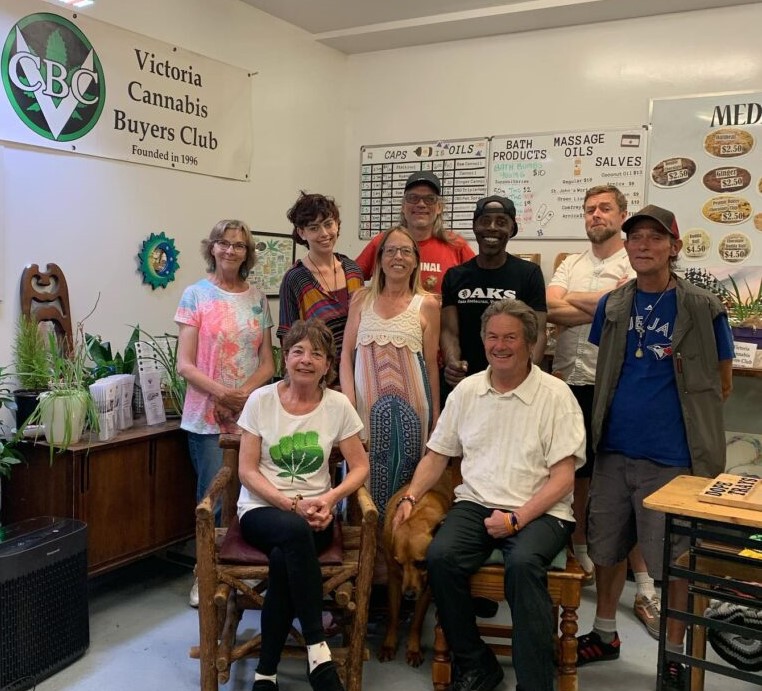 In the end, the VCBC is still non-compliant because the provincial recreational model, as well as the federal medical model, remain completely useless to chronically ill and disabled patients. Cannabis users need a place to speak to a human being who is knowledgeable about cannabis and therapeutic use of this medicine for managing chronic pain. Patients need a third space to consume their medicine with their peers, with dignity. The VCBC continues to offer low-cost medicine in a mind-boggling range of doses and products. We put the choice back into the hands of patients to decide what medicines they need to treat their conditions, because they know their bodies the best. We offer storefront medical access because patients deserve access to good advice, the opportunity to learn from other disabled folks, and to retain high-quality and low-cost medicine that they rely on every day.
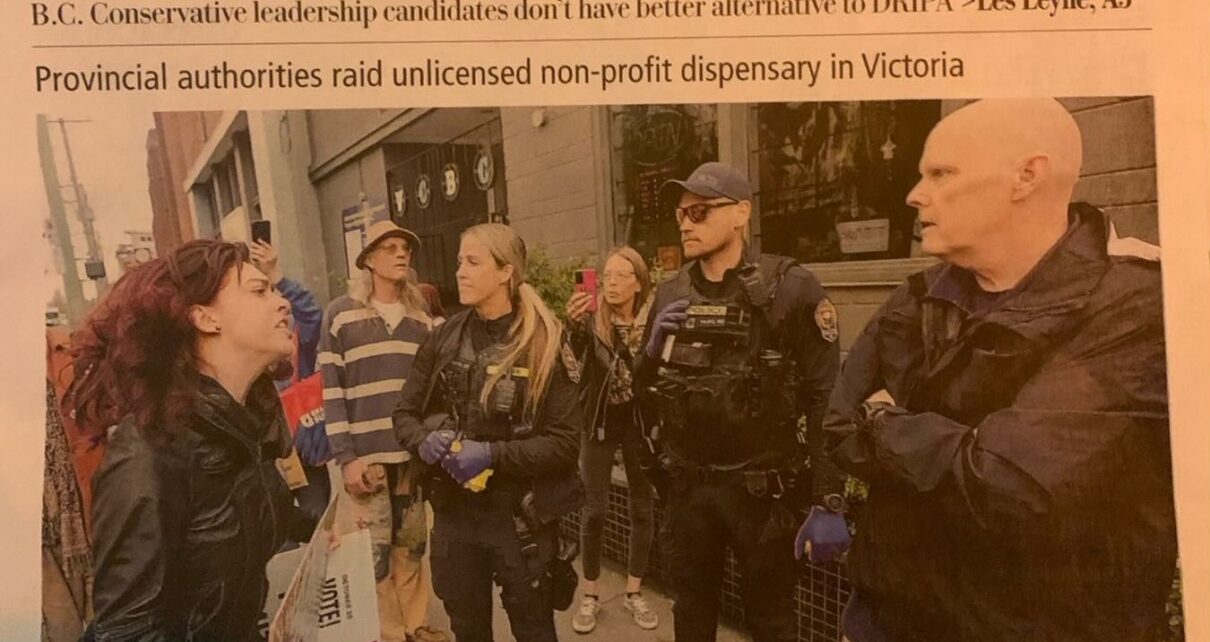
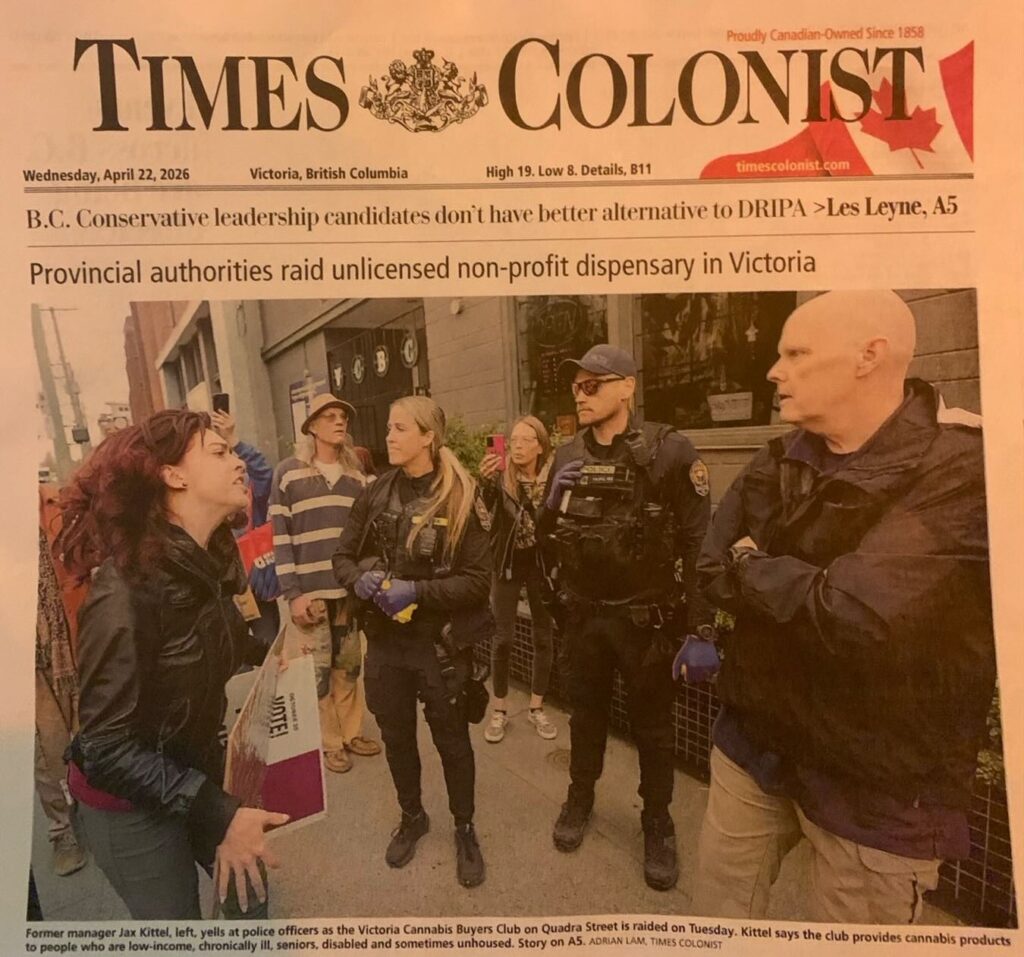
The VCBC was raided for the fourth time because we continue to ignore the demands of the government to conform to a system that would abandon the patients we have served for 30 years. Cannabis enforcement by the province is administered from the office of the Ministry of Public Safety and Solicitor General. The Community “Safety” Unit (CSU) are the dorks in baseball caps who seize our cannabis and burn it in incinerators because they see our work as a threat and a danger—a threat to corporations and the status quo. In 2023, the CSU handed down a $3.5 million fine to the directors of the VCBC for non-compliance. We have since appealed the fines with the submission of a judicial review, which has sat unanswered for three years. We remain waiting for our day in court to argue that the CSU has no authority to enforce against us due to the Canadian Charter of Rights and Freedoms, which states that citizens have the right to choose how to treat their own medical conditions. Therefore, we argue that the CSU does not have jurisdiction to raid or fine us, and that the current system is unlawful and unconstitutional for patients in need of access to this life-saving medicine. But instead of giving us our day in court, we got raided again.
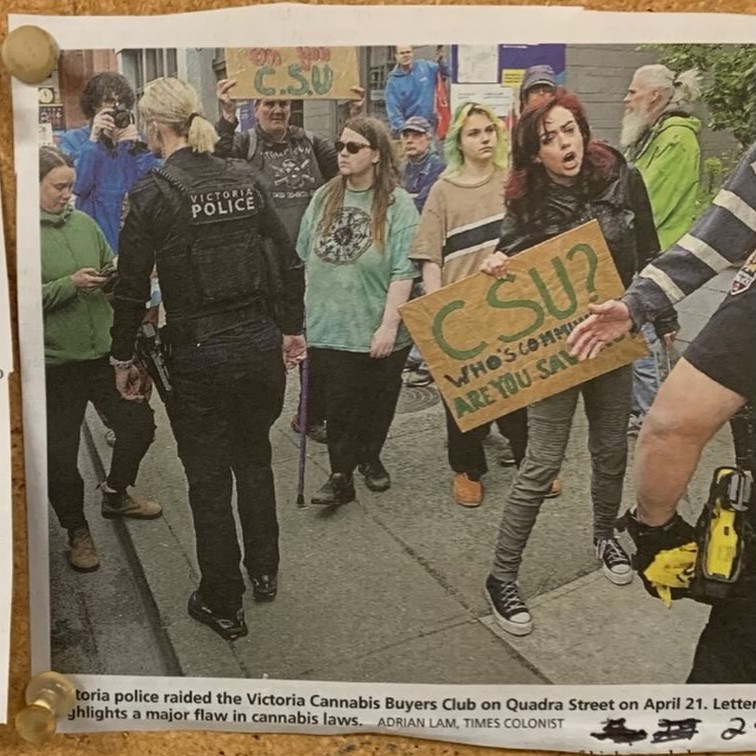 The day before the raid was Monday, April 20th, or 420. People often ask why we still celebrate 420 if cannabis is legal. And the answer is that yes, cannabis was legalized in 2018, but that does not mean we have received justice or an equitable legal system that meets our needs. In fact, we are far from free because, as we have seen, we were raided the very next day. The CSU is also now taking action to seize the homes of the directors who have given the most to keep this non-profit organization afloat. The war against cannabis prohibition is far from over. Asking why we are still fighting for cannabis rights and access even though it is legal is akin to asking why we are still fighting racism even though slavery is over.
This January, we celebrated 30 years of the VCBC’s non-stop commitment to cannabis activism. That’s 30 years of showing up every day, facing the risk of government enforcement, and doing it anyway because sick people need it. 30 years of operating a non-profit business with patients’ needs centred over profit-making. 30 years of working consistently and tirelessly towards the goal of making medical cannabis cheap and accessible to those who need it the most. The journey is far from over, and our battles with the province are ongoing, but we are in it for the long haul to win the war against cannabis prohibition.
Jax Kittel
May 14th, 2026