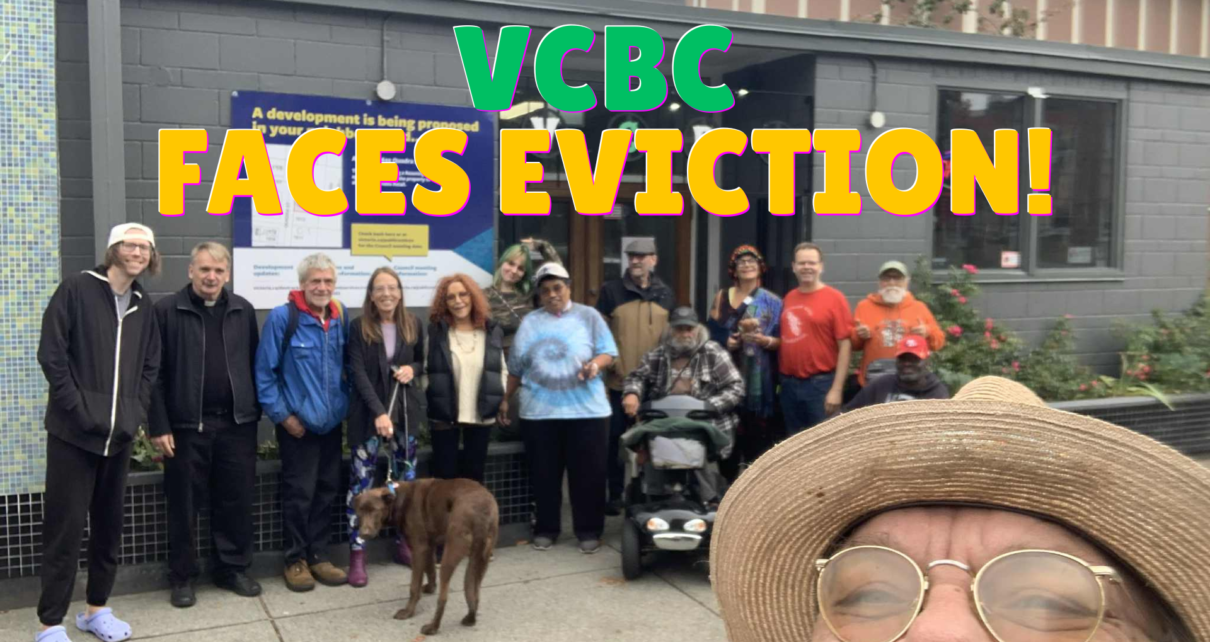
Dear Mayor Alto and City Council
Hope this email finds you healthy and happy.
As you are aware, the Victoria Cannabis Buyers Club is under extreme pressure from the provincial government. Please help us continue our life-saving, harm reduction activities. Before explaining what we are asking, it is important to share some of the history that got us to this point.
The VCBC started in 1996 using the Charter of Rights and Freedoms and case law precedent on the right to access medical treatment to create its mandate. According to the Charter, when a person has a serious medical condition they have a right to determine their course of medical treatment, with or against their doctor’s approval. We decided to provide cannabis products to patients with proof of a diagnosis of a serious medical condition.
Health Canada was forced by the courts to develop a medical cannabis program in 2000 by Terry Parker, who suffered from severe epilepsy. He proved that orally taking synthetic tetrahydrocannabinoid, or THC, which has a Drug Identification Number, does not control his seizures as effectively as smoking a cannabis bud, which contains a variety of similar cannabinoids and essential oils.
When the Marijuana for Medical Access Regulations were released in 2001, they allowed patients, or a caregiver, to grow some plants but provided no other means of legally accessing cannabis. No mail order. No storefront. No edibles.
Since the formation of the MMAR, patients and compassion clubs have successfully challenged various restrictive aspects of the regulatory scheme. Health Canada has responded with incremental improvements that typically end up back in court. For example, the VCBC won a unanimous decision at the Supreme Court of Canada in 2015 that made cannabis edibles and extracts legal for patients to use, but Health Canada responded by limiting the amount of THC in each product to 10mg.
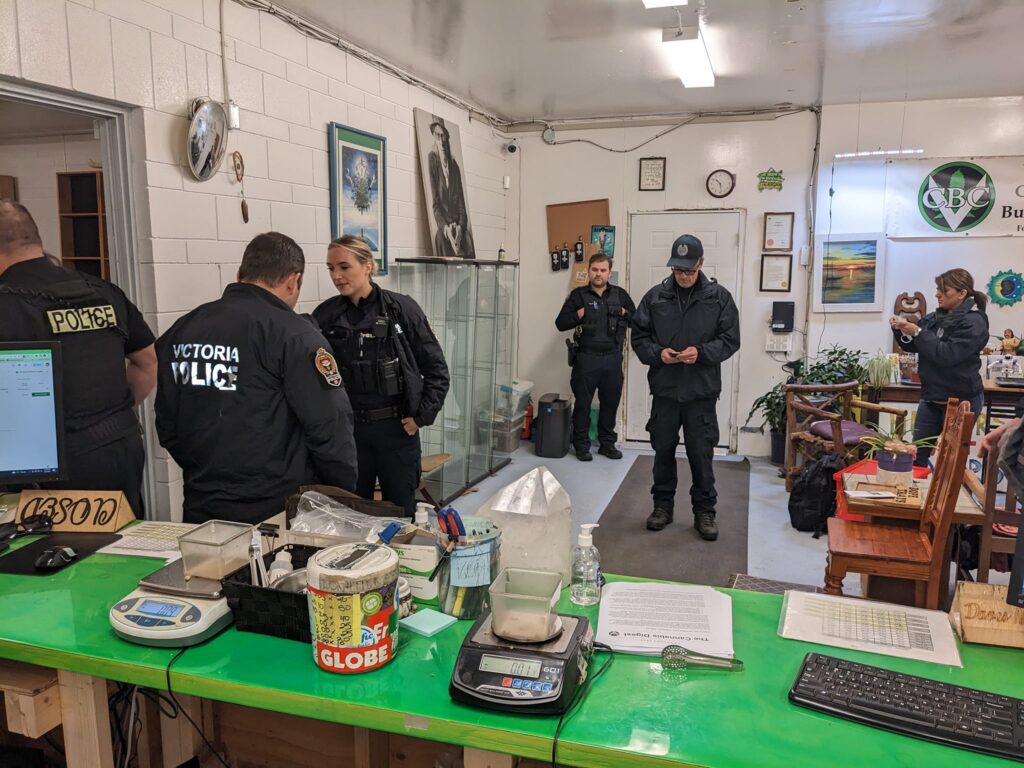 Between January 2002 and February 2003, the VCBC was raided 4 times. We reopened the day after each one, eventually beating all 15 cannabis charges using various constitutional arguments. Immediately after the raids began, I spoke at city council meetings for years looking for any assistance possible. In an attempt to understand both sides of the argument, the city invited Health Canada to send representatives to explain the nuances of the program.
When Health Canada’s officials arrived for the meeting, they refused to allow any politician into the room to ask questions, including the mayor. These representatives simply showed a power point presentation made up of screen shots from Health Canada’s website to a few police and health officials. They refused to answer any questions.
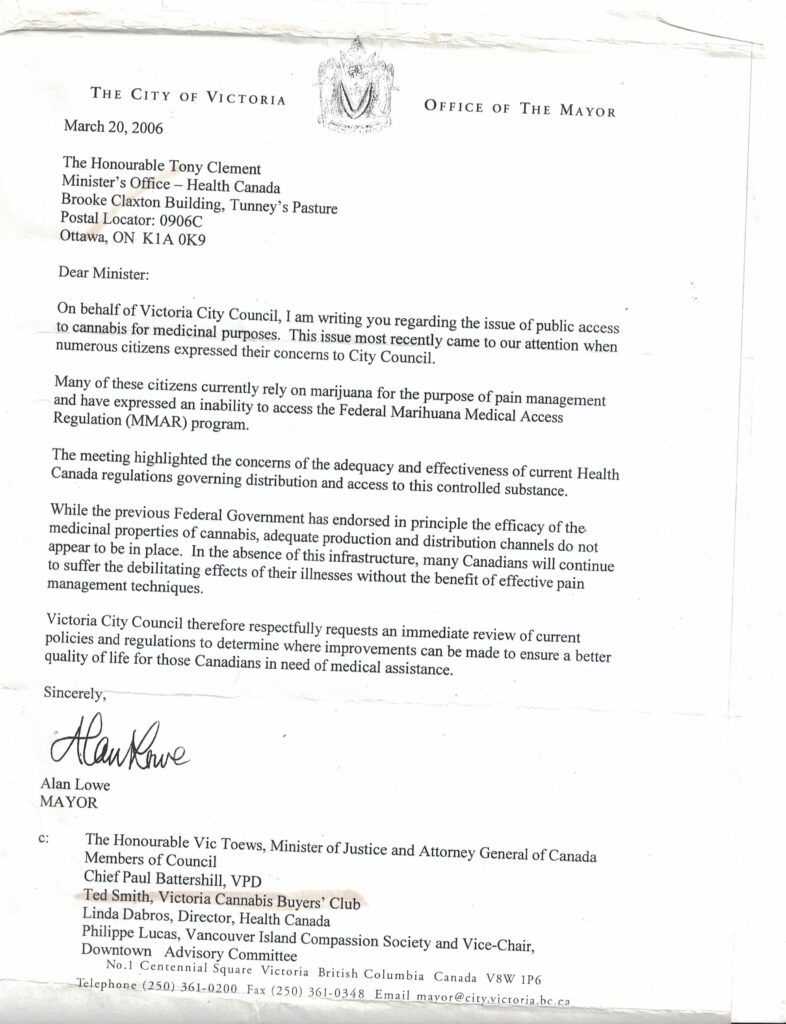
The letter attached from Mayor Lowe in 2006 was written after this experience. Though Mayor Lowe was considered a conservative in many ways, he could not help but condemn Health Canada for having inadequate supply and distribution channels in place. While the council could not condone the activities of the VCBC, the fact is the club was not raided again until after legalization in 2019.
This history is important because a quarter of a century after the creation of a medical cannabis program, the vast majority of patients that use cannabis as medicine are left with inadequate options. Health Canada still lacks justification for not allowing storefront access for medical purposes where patients can get high dose edibles. These fundamental flaws in the legal medical cannabis program have led to a series of problems for patients, doctors, judges and compassion clubs.
When legalization came along, it was clear the VCBC could not comply without completely abandoning its most seriously ill patients, especially because edibles were not even legally available at all in the first year. Having both a bakery and a retail store would mean that two separate licenses would be required and the regulations would not allow a processor to also have a retail recreation store. Being a non-profit society further complicates matters, as it can be extremely difficult gaining financing without a wealthy board of directors using their credit lines.
After the first raid by the Community Safety Unit in 2019, we approached city council for assistance in obtaining an exemption from the Cannabis Act. A letter was written to Health Canada and to B.C. Solicitor General, Mike Farnworth, who responded with a short statement claiming he supported the VCBC in obtaining some exemptions from the Cannabis Act without specifying exactly what he meant. The city wrote a second letter in response but the Solicitor General never clarified what he meant or how we might be able to obtain any exemptions.
 After a second raid in 2020, the VCBC was fined $3.2 million and an identical administrative fine was given to me, though that was later dropped. Then our building was sold and we were evicted. In early 2023, we moved to 1625 Quadra Street where the CSU raided again within weeks of settling in. After that we filed a lawsuit and for an injunction against the federal and provincial governments, as well as engaged in another wave of advocacy towards Mike Farnworth.
The main reason our court applications have been held up is because we have been tied up in administrative regulations and have been waiting for the B.C. Solicitor General’s staff to make their final decisions on our appeals against these fines. Last fall, that final decision was given to us and we immediately filed for a judicial review on the entire situation. It is this judicial review that we believe will redeem the VCBC and force Health Canada to license storefront medical access that provide high dose edibles.
Perhaps sensing another potential loss in court, staff working for the new B.C. Solicitor General, Nina Krieger, have taken extraordinary measures to attempt to shut the VCBC down. First, CSU officers raided the club for a 4th time in April 2026. That month a lien was placed on the property of VCBC board member, Clea Maclean, for the uncollected fines. Then, at the end of the month, a Civil Forfeiture application was submitted by the province to seize 1625 Quadra Street from the VCBC landlord, claiming the owners of the building are committing income tax fraud and receiving proceeds of crime by accepting rent money from us.
Today we were given an eviction notice, though no date has been set yet.
It is not an understatement to suggest that many lives are on the line here. Some of our members have delayed going through MAID because they have found an unexpected quality of life from our products. Others feel they will end up committing suicide if they have to go back on prescription drugs. Some will die of cancer, unable to afford the medicine they require to stay alive. The rest will simply suffer and likely die prematurely, unless they go to the real black market.
So here it is: Will the City of Victoria provide the VCBC with a space to operate from until the conclusion of the judicial review?
If the city does not provide us with a space, we will be left with no alternative than to set up a tent on municipal property to provide our patients access to these medicines. This is not a situation that anyone wants, and it would leave the VCBC very vulnerable to further actions by the CSU. The only thing more horrible is thinking about what things would be like for our patients if the club did not exist at all.
Providing assistance to the VCBC would fall in line with help given to other, local non-profit harm reduction organizations. For example, the Society of Living Intravenous Drug Users, SOLID, has been receiving various funding streams from the city and the province, while also selling cannabis illegally out of a storefront two blocks away from the VCBC. This is the first time the VCBC has asked for any financial assistance of any type from any level of government, even though we are an essential service in the eyes of many.
While the VCBC does not deal directly with deadly illegal or legal drugs, it definitely fits within the harm reduction framework in several ways:
Patients in chronic pain or experiencing intense pain from an accident or surgery can avoid using prescription opiates and other legal narcotics by smoking cannabis and/or eating high dose edibles.
Smoking cannabis concentrates and/or consuming high dose edibles can help some cut down or quit their use of illegal street drugs.
Former addicts using legal opiate replacements, like Methadone, can cut down or quit their use of these replacements.
Aside from being a safe alternative to opiates, cannabis can help many patients reduce their use of other prescription drugs, like anti-inflammatories, muscle relaxants, antidepressants, sleeping pills, and anti-seizure medications. Since we help many seriously ill, elderly patients, who are often taking a range of prescription drugs, we have also recently hired a pharmacist to help advise patients about potential drug interactions. We are at the frontline of the harm reduction community in Victoria.
For example, the cookies we have provided for 30 years are more potent, less expensive and made with healthier ingredients than what is found in the legal market. Each $3 cookie has about 75mg of THC. In the legal market, a 10mg cookie typically costs around $10. For a patient that uses one of our cookies to sleep every single night, the difference between $3 and $70 or $80 makes the legal options virtually unavailable.
We ask that the City of Victoria give the VCBC shelter against the provincial and federal governments to avoid a humanitarian crisis being created by an overzealous bureaucracy. This life or death scenario can only be averted by granting us a sanctuary until such time as a judicial review can be heard. The negative impacts of granting us a refuge would be minimal compared to the serious consequences that would result from the VCBC becoming homeless.
It is justice we want, not charity. Compassion not forgiveness. Our patients, your citizens, deserve reasonable access to affordable medicines in a safe space. Together we can work with the other levels of government to ensure the VCBC transitions into the legal system without compromising the quality of its products and services.
Normally such an undertaking would require a great deal of time and consultation. However, this situation is far from normal and time is of the essence. While we do not know how long we can stay at 1625 Quadra Street, it may be months, even weeks before we have to move. This is a potential emergency that requires your immediate attention.
Please give us a space to operate until the conclusion of our judicial review.
Thank you for your time helping us with this urgent matter.
Have a fantastic day.
Ted Smith
Letters:
Letter-from-the-Mayor Letter-from-the-Minister-of-Public-Safety-and-Solicitor-General
Letter from the City of Victoria to Health Canada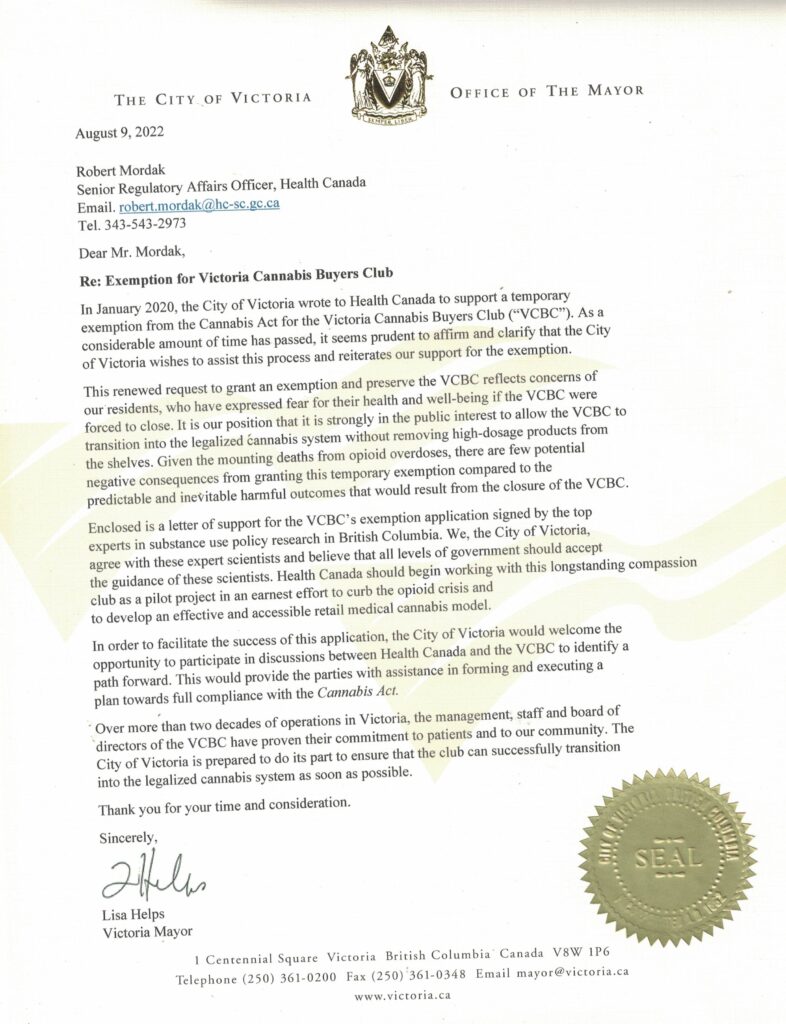
Letter from Former Mayor Alan Lowe